
The Story
In the contemporary realm, real estate projects have seen a new wave of growth. The demand for offices and residential spaces has elevated in the Indian market. However, with the onset of the global pandemic, the status of real estate in India has become highly controversial.
One such residential real estate project in Kolkata — DTC Southern Heights — was running short on registrations. When they contacted us in August 2020, our goal was clear: generate registrations that exceeded their original forecast.
We had to start from square one. With Facebook advertising campaigns as our sole channel, we pledged to attain the desired results for our client. Throughout our journey, we met and conquered numerous challenges using our strategic planning and mindful marketing techniques.
Challenges
Once we audited our client's existing ad accounts, we set an objective to convert their existing Facebook ad campaigns into high-quality registered leads. However, we encountered several expected and unforeseen challenges along the way:
Lack of Past Data
Social media intent and behavior data is crucial for generating lead registrations. We faced this challenge directly with the real estate project in hand, as there was virtually no legacy data present regarding user intent, targeted audience lists, successful ad variables, or suitable demographics.
Improper Data Tracking
In social media marketing, improper data tracking can end up hurting businesses more than doing them good. With improper data tracking, it was difficult for us to build accurate custom audiences, retarget site visitors, or run optimized lead generation ads.
Neighboring Competition
To add to our challenges, there were several similar projects in the surrounding area offering apartments at a lower price point than our client's property. We faced the challenge of generating high-volume, high-quality leads without lowering our positioning, shifting focus instead toward amplifying the unique merits of the DTC Southern Heights project.
Strategy
Given these challenges, getting users to book site visits was difficult, but far from impossible. With a structured strategy in mind, we designed a plan to systematically scale conversions:
Initiation of Data Tracking Methods
It is crucial to track each data point to identify user behavior and pinpoint what is holding them back from completing a purchase action. We initiated tracking at multiple user touchpoints — such as video views, landing page views, and lead form sign-ups. This gathered the raw data we needed to optimize campaigns in the right direction.
To expand our potential customer base, we tapped into Facebook's demographic targeting data and analyzed what users did after viewing our ads. Collecting high-quality conversion data takes time and patience, but it yields extraordinary results in the long run.
Trial and Testing
With tracking established, we engaged in testing which ad combinations drove the most registrations at the lowest cost:
- Creative Variables: Tested multiple ad formats including Video walk-throughs, Static Images, Slideshows, and Carousels.
- Audience Narrowing: Identified the most responsive cohorts by reading real-time metrics and refining demographics according to specific criteria, improving lead accuracy.
By constantly analyzing the data, we successfully isolated the winning combinations of audience targeting and creative formats.
The Ultimate Plan
Once we identified the winning ad sets, we implemented automated scaling rules for our Facebook ads. We utilized **horizontal scaling** to increase our campaign reach substantially without inflating our Cost Per Lead (CPL). Our marketing team contributed to this success with their focused execution and data-backed performance.
The Results?
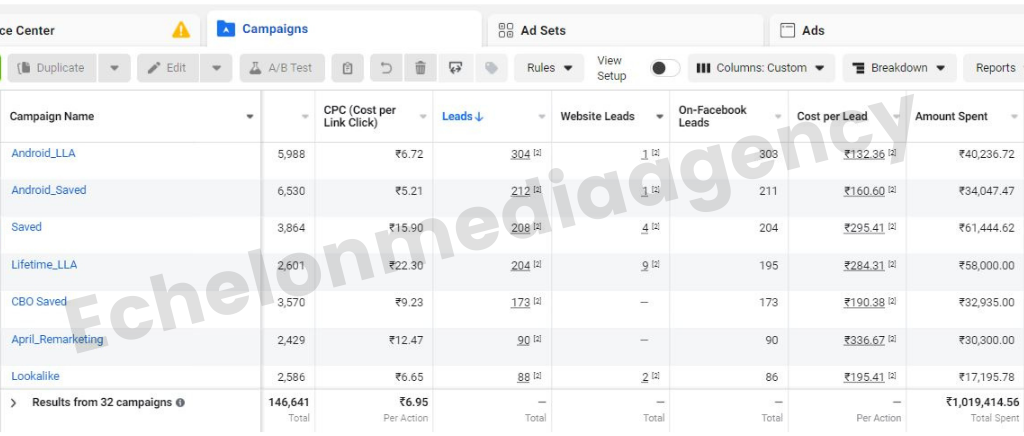
Our structured methodology yielded substantial results over a 7-month window:
- Lead Volume: Generated a total of 3,400+ leads, with over 500+ registered hot leads ready for site visits.
- Conversion Rate: Helped the business close bookings at an average conversion rate of 17%.
- Account Efficiency: Reduced the blended cost per lead by scaling successful campaign types horizontally.
By transforming raw social media traffic into a structured real estate lead engine, we helped DTC Southern Heights achieve sustainable, predictable sales growth.